To pro-long the life of your jewellery items I always recommend:
Avoid getting your jewellery wet.
Treat your jewellery with care, remove before sleeping and exercising to avoid damage.
Storing it in a dust proof jewellery box or airtight container will extend the life of any metal plating. Please note that plating will change colour over time with regular wear.
Contact with sunscreens, creams, hairsprays, perfume, salt/chlorinated water, soaps and chemicals can cause damage to the porous stones and metals finishes.
Care Instructions
Our Materials
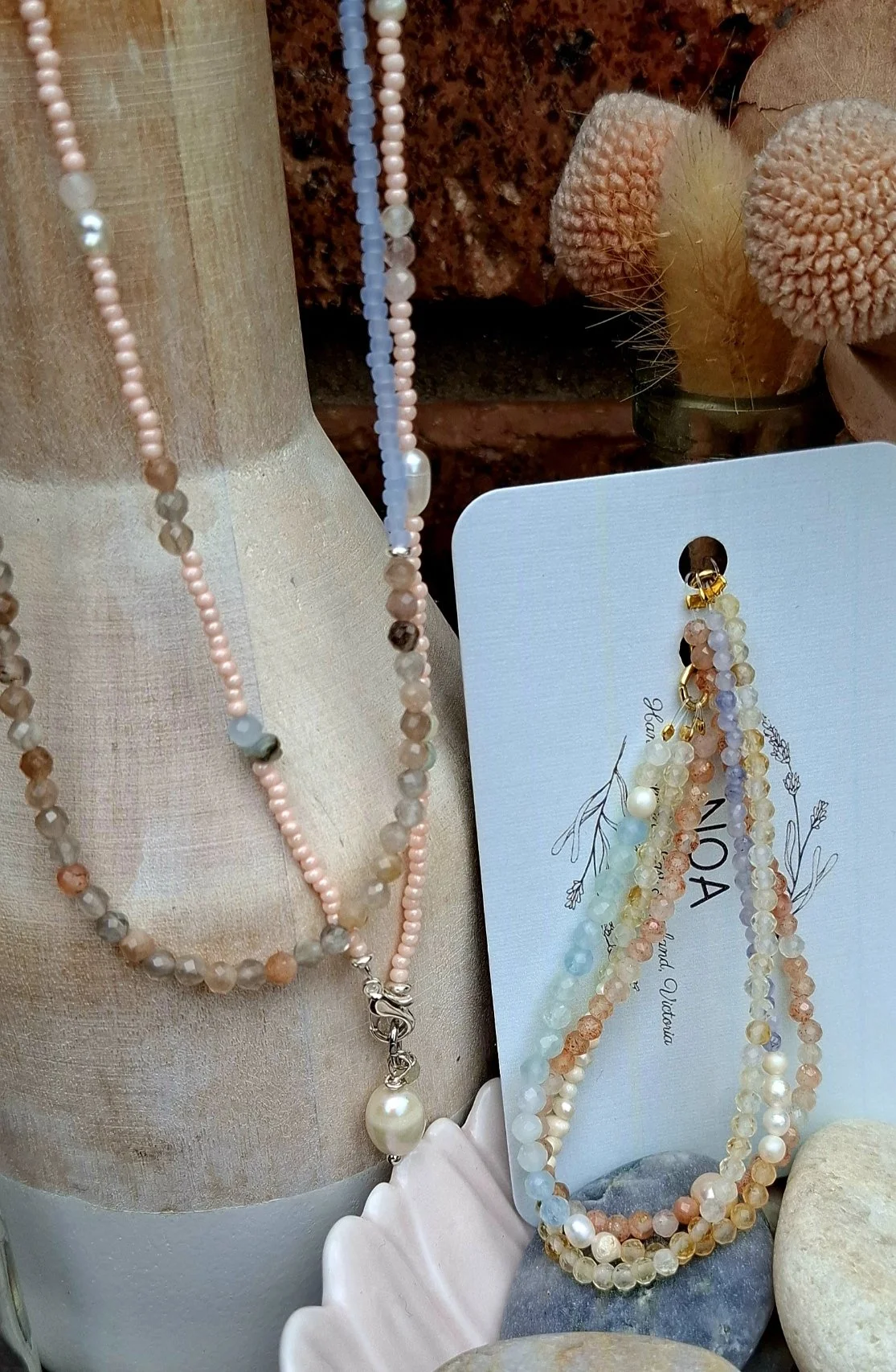
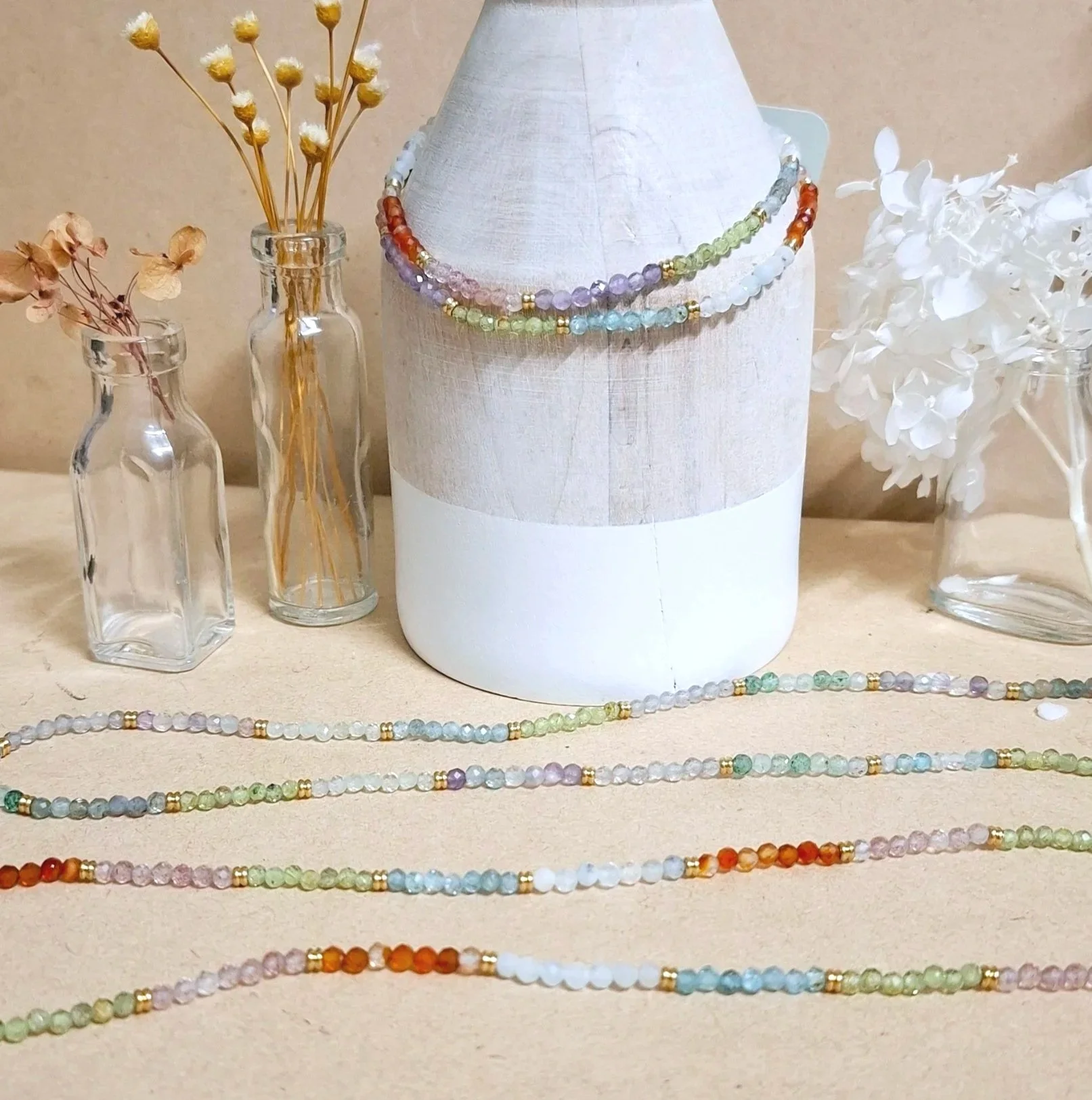
My handmade jewellery features stunning natural stones and farmed baroque freshwater pearls in various colours and shapes sourced from all over the world. The origin of our gemstones is as multicultural as our Aussie community. From Indian Tourmaline to Chinese pearls, NOA Australia sources pieces that will bring the best sparkle and the most unique aesthetic to my designs.
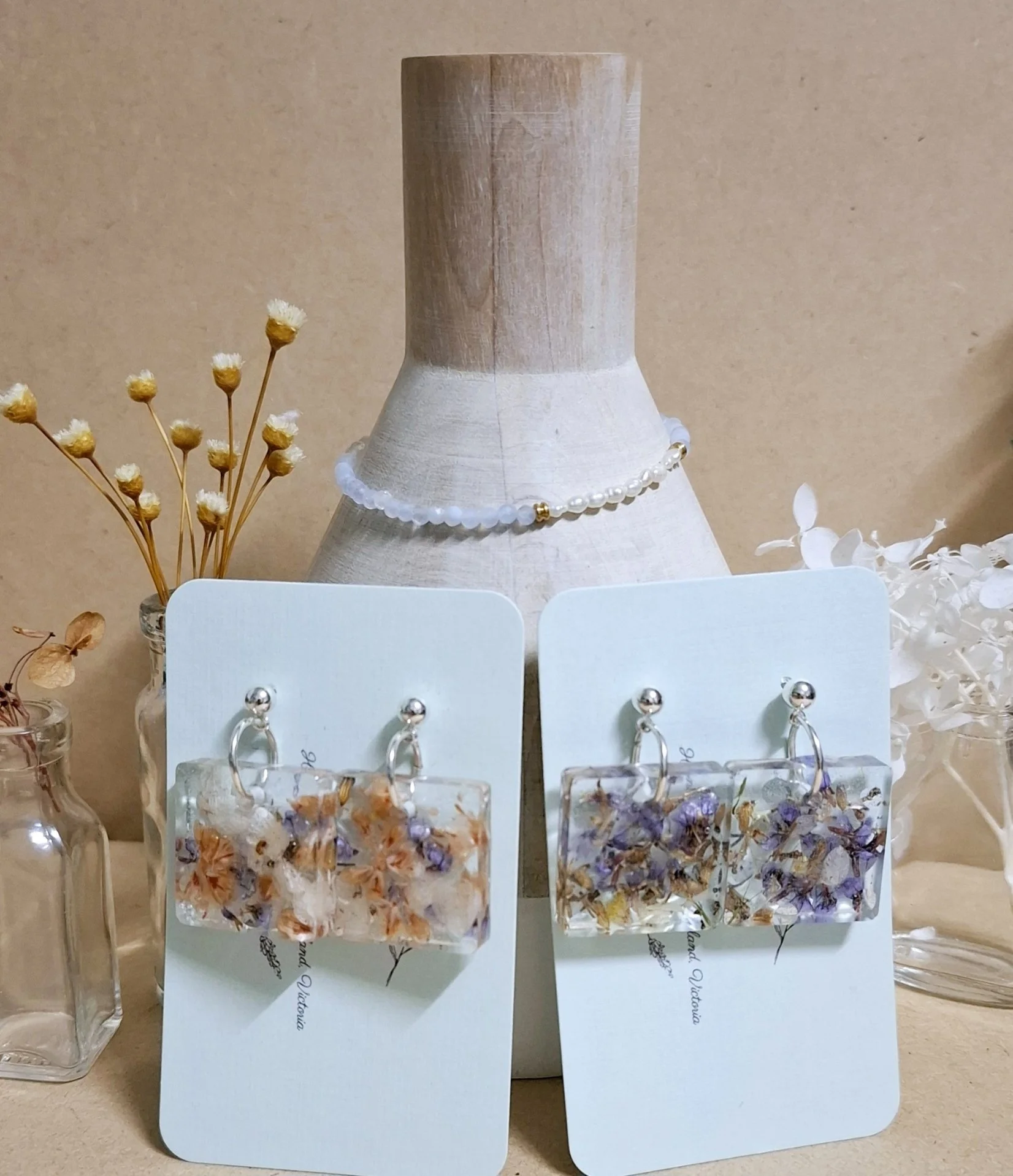
My botanical resin collections featuring two part and UV resin as well as locally grown dried flowers.
To compliment my work, I utilise a variety of metal fixings to bring your jewellery item to life. I use alloy metals that are fundamentally important in jewellery making. Pure precious metals are often too soft for everyday wear. Alloying — mixing two or more metals — enhances essential properties such as durability, strength, and affordability to my customers.
My earring posts are predominately stainless steel or plated stainless steel (which gives it a gold colour). It is important to note that there is a variety of stainless-steel options available on the market for jewellery and I utilise a variety in my pieces.
All plating whether it is PVD or gold vermeil may naturally change in colour over time during wear. The higher-grade metals such as 24k gold will usually wear off the fastest and also will cost you the most. Metals react to heat, body oils and other chemicals during wear. It is important to follow our care instructions to ensure your items remains like new for as long as possible. Tarnishing over time is not considered a fault of my jewellery.
You will notice I choose harder wearing alloys that have rich colours with finishes being closer to a rich gold and gunmetal silver. Despite what some retailers will tell you, all the most common varieties of stainless steel contain varying amounts of nickel. Nickel is primarily added to enhance the metal's durability and corrosion resistance, but its presence depends entirely on the specific grade and category of the metal. Those with severe nickel allergies should even avoid Hypoallergenic 316L stainless steel.
316L Surgical Stainless Steel: Contains lower amounts of carbon and is highly corrosion-resistant. Nickel makes up about 10% to 14% of its alloy composition. Carbon helps prevent the nickel from reacting with your skin.
304 Stainless Steel: Typically contains about 8% to 10.5% nickel alongside 18% to 20% chromium. It is highly resistant to rusting and tarnishing under normal conditions.
201 Stainless Steel: Is an austenitic chromium-nickel-manganese alloy. It substitutes nickel with higher amounts of manganese and nitrogen. While it contains less nickel than found in 304, it can be less resistant to tarnishing.
Gold Stainless Steel: All grades of stainless steel are made gold typically utilising either Ion Plating, Electroplating or PVD. For its durability I opt for PVD where the steel is vapor-coated in a vacuum chamber with a titanium alloy, most commonly Titanium Nitride (TiN). Titanium nitride is incredibly hard, scratch-resistant, and possesses a brilliant, lasting rich gold hue.
Ferroalloy: Is made from iron-based alloys (ferrous alloys such as chromium, nickel, or carbon) which is highly durable, and tarnish-resistant.
Copper/Brass: If not stainless steel many of the small pins I use are a variety of a copper or brass base with an alloy plating.
If you have any allergy question, please reach out prior to purchase.